Scientific Illustration — Palaeontology
This is a course I took in paleo-artistic illustration with Hugo Salais, a biologist and paleo-artist, through Illustraciencia. The course focused on creating paleoart by collecting relevant and reliable data, interpreting fossil remains, progressively reconstructing anatomy, and representing an extinct organism’s behaviour and way of life during the span of 2 months.
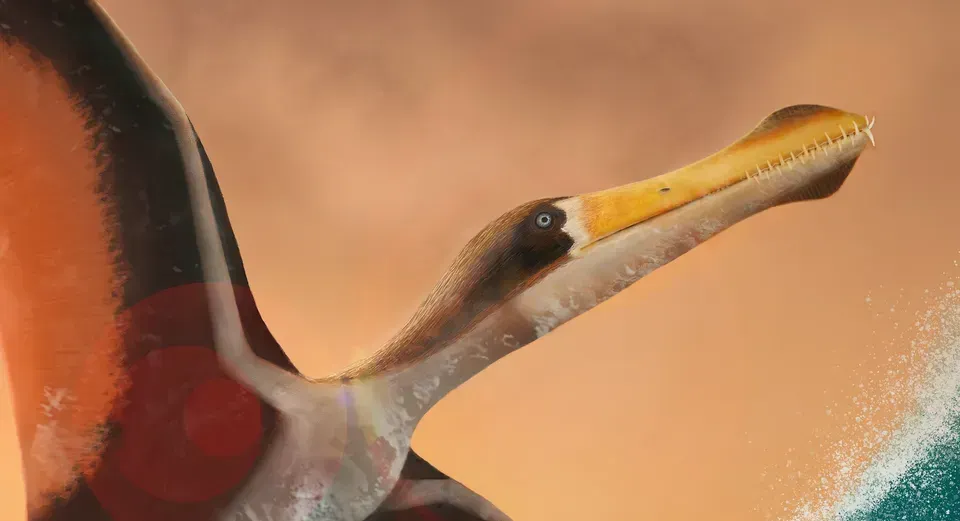
I focused on the pterosaur Anhanguera piscator, a pterosaur that existed during the Late Cretaceous in what is known as Brazil today.
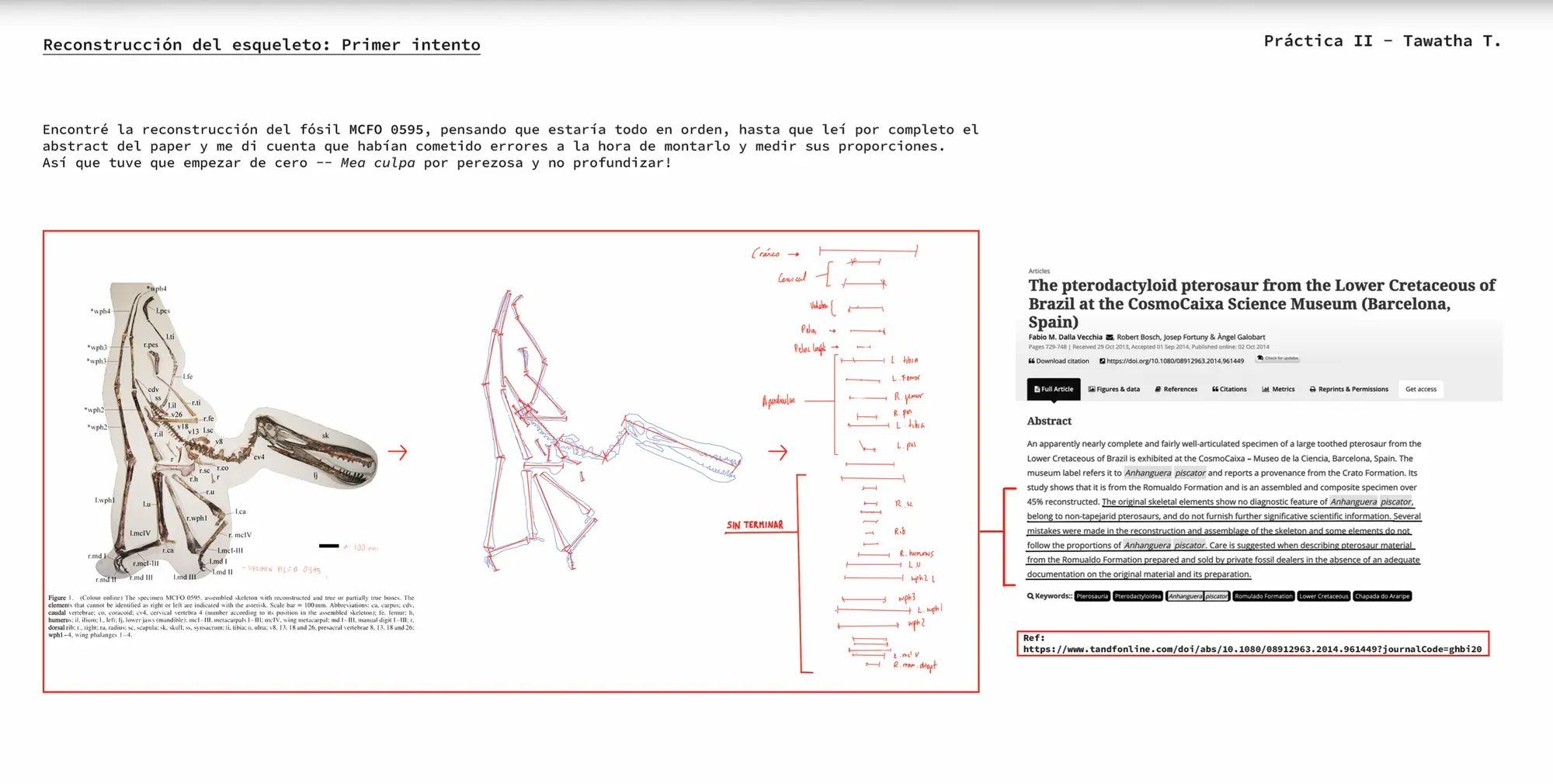
Skeleton reconstruction: first attempt
I began by trying to reconstruct the skeleton from a published fossil specimen, but I realised the source material was incomplete and not ideal for direct measurement, so I decided to start again with better references.
Skeleton reconstruction: second attempt
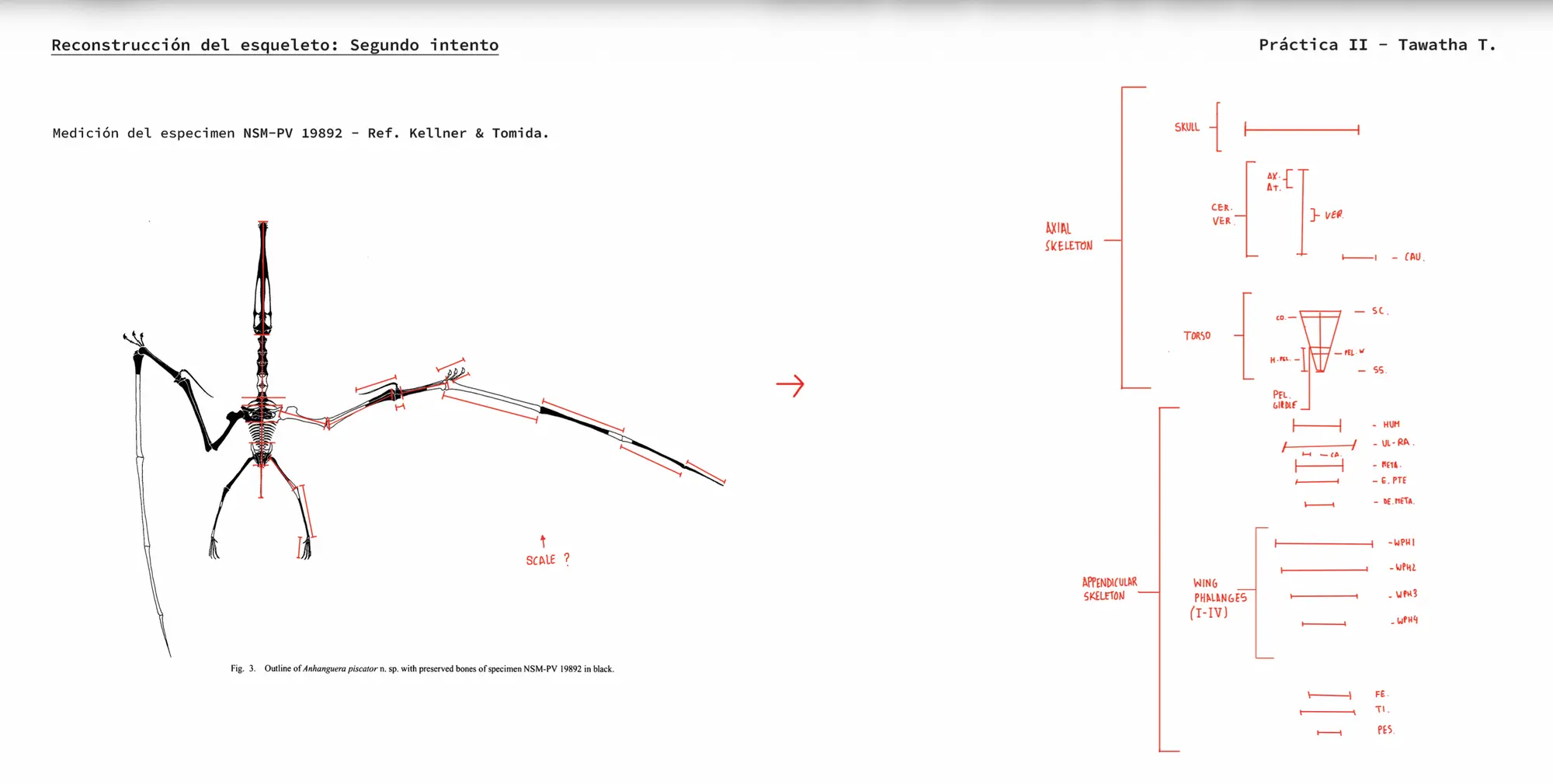
I switch to a more useful reference specimen, measure the preserved bones, and begin establishing the main proportions of the skull, axial skeleton, wings, limbs, and feet.
Phylogenetic inference
I compare related pterosaurs, especially Tropeognathus mesembrinus, to infer missing anatomical information and fill the gaps in the incomplete Anhanguera skeleton. Original source image omitted due to copyright.
Cranial references
I gather and compare skull diagrams and fossil references for Anhanguera piscator, focusing on skull shape, jaw proportions, crest placement, and missing cranial elements. Original source image omitted due to copyright.
Additional reconstruction references
I compare previous skeletal and life reconstructions of Anhanguera and related pterosaurs to check posture, stance, wing shape, and overall body proportions. Original source image omitted due to copyright.
Skeleton reconstruction: draft
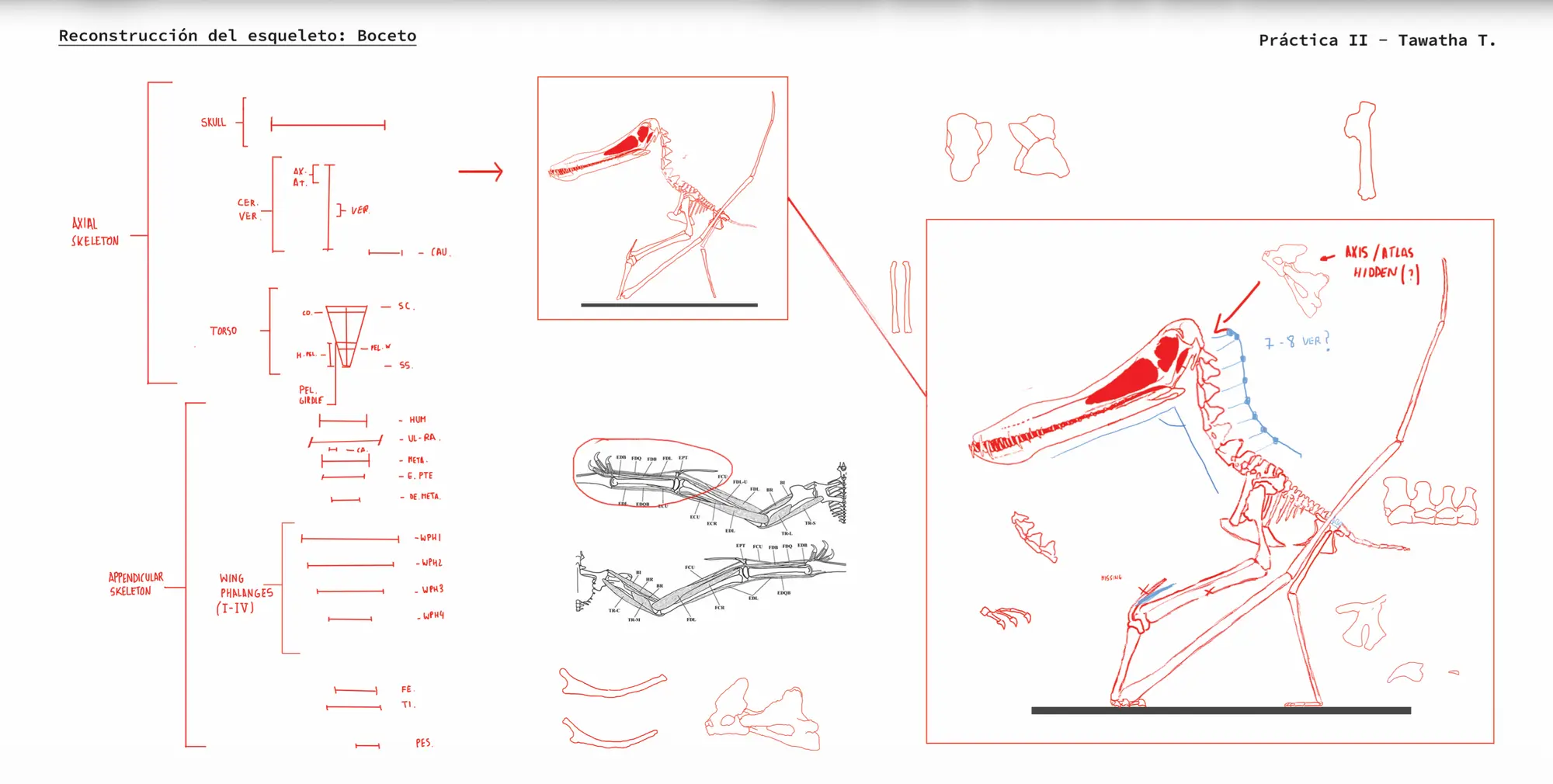
I assemble my own skeletal draft, placing the skull, spine, limbs, wings, and missing bones into a coherent pose while marking uncertain areas and corrections.
Skeleton reconstruction: final
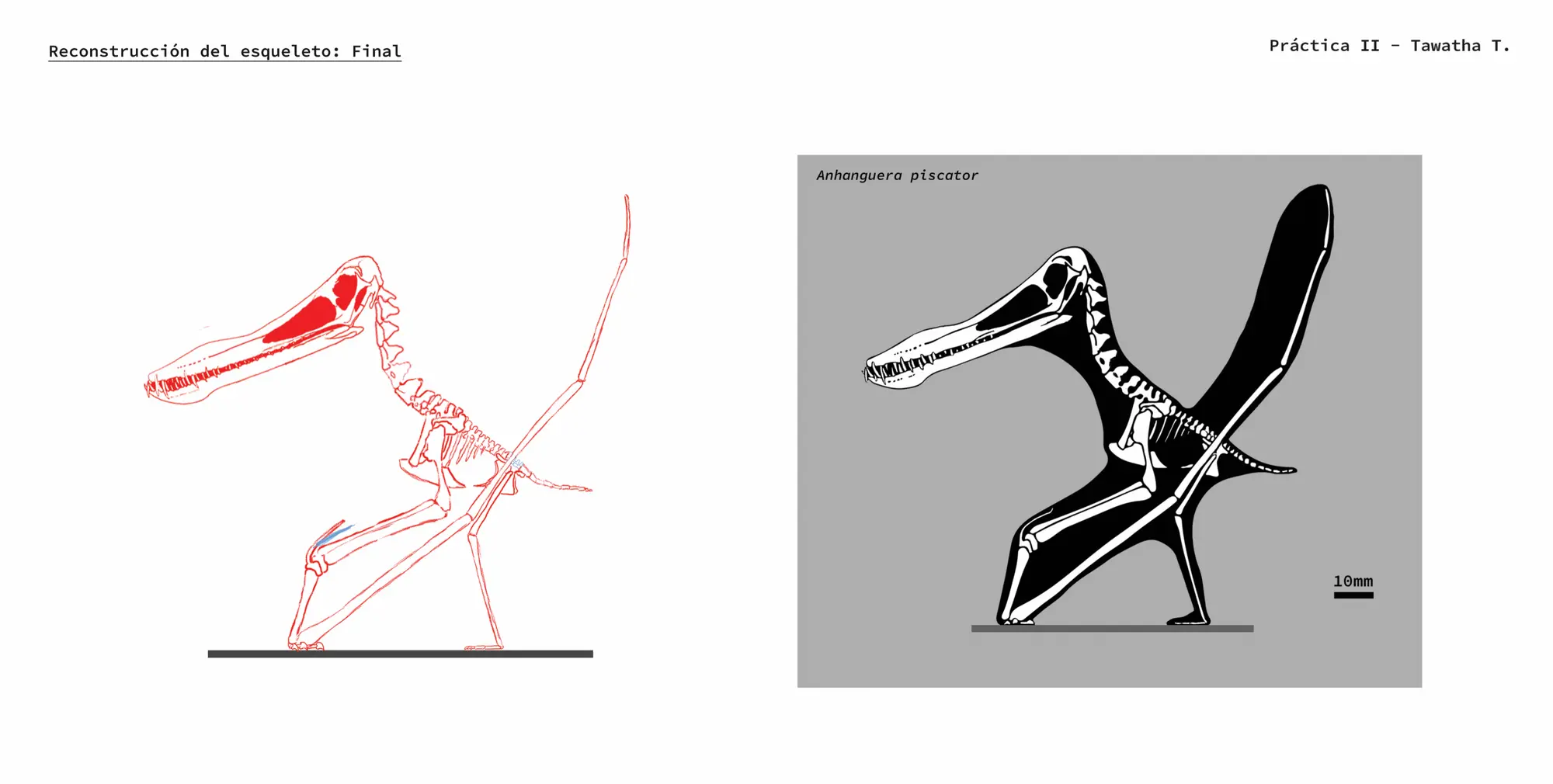
I refine the skeletal drawing into a cleaner final reconstruction, translating the measured fossil information into a simplified black-and-white skeletal silhouette.
External appearance: skin and pycnofibres
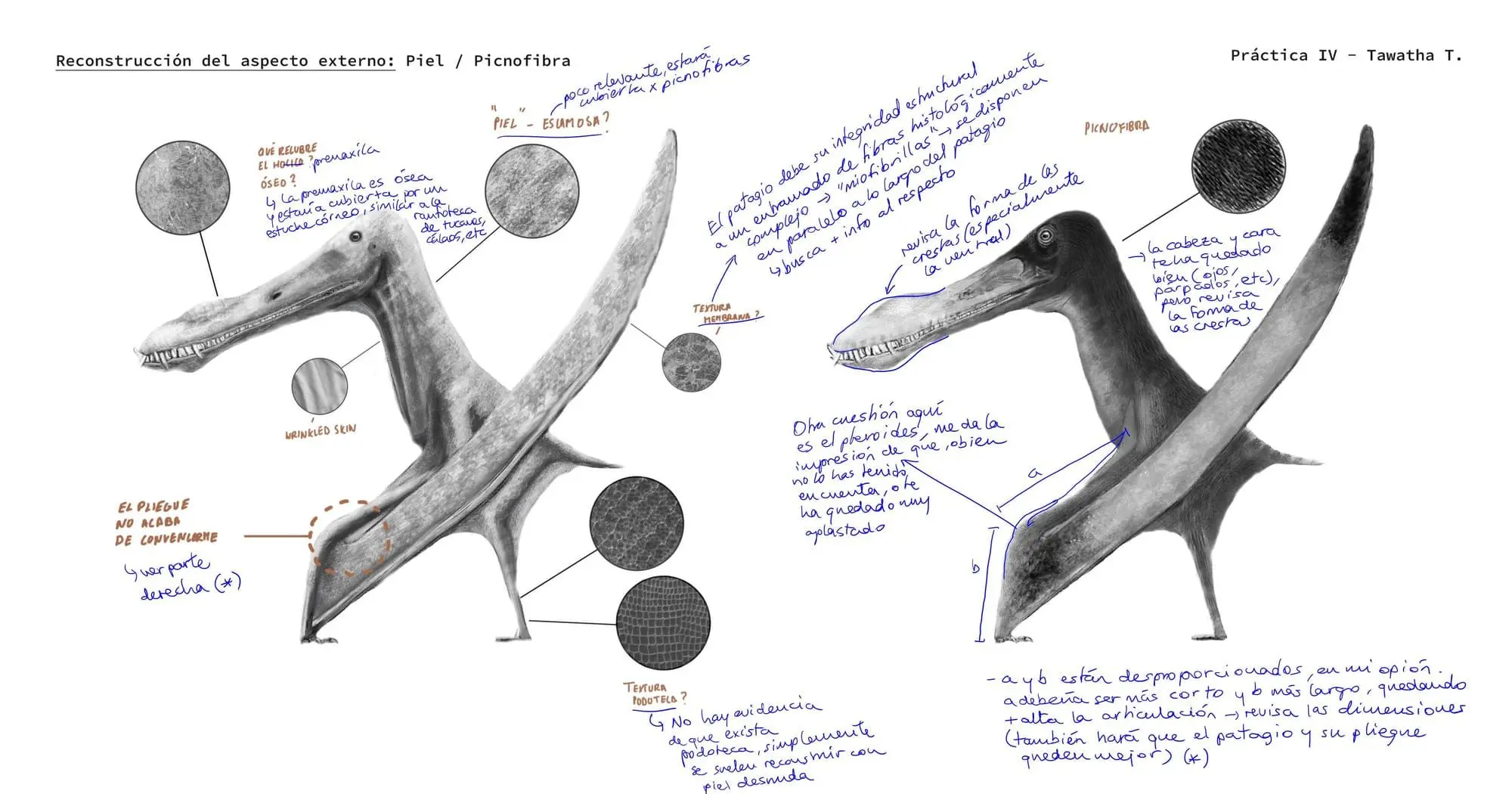
I begin reconstructing the animal’s external appearance, testing skin texture, pycnofibre coverage, membrane texture, colour zones, and anatomical corrections around the head, neck, and wing.
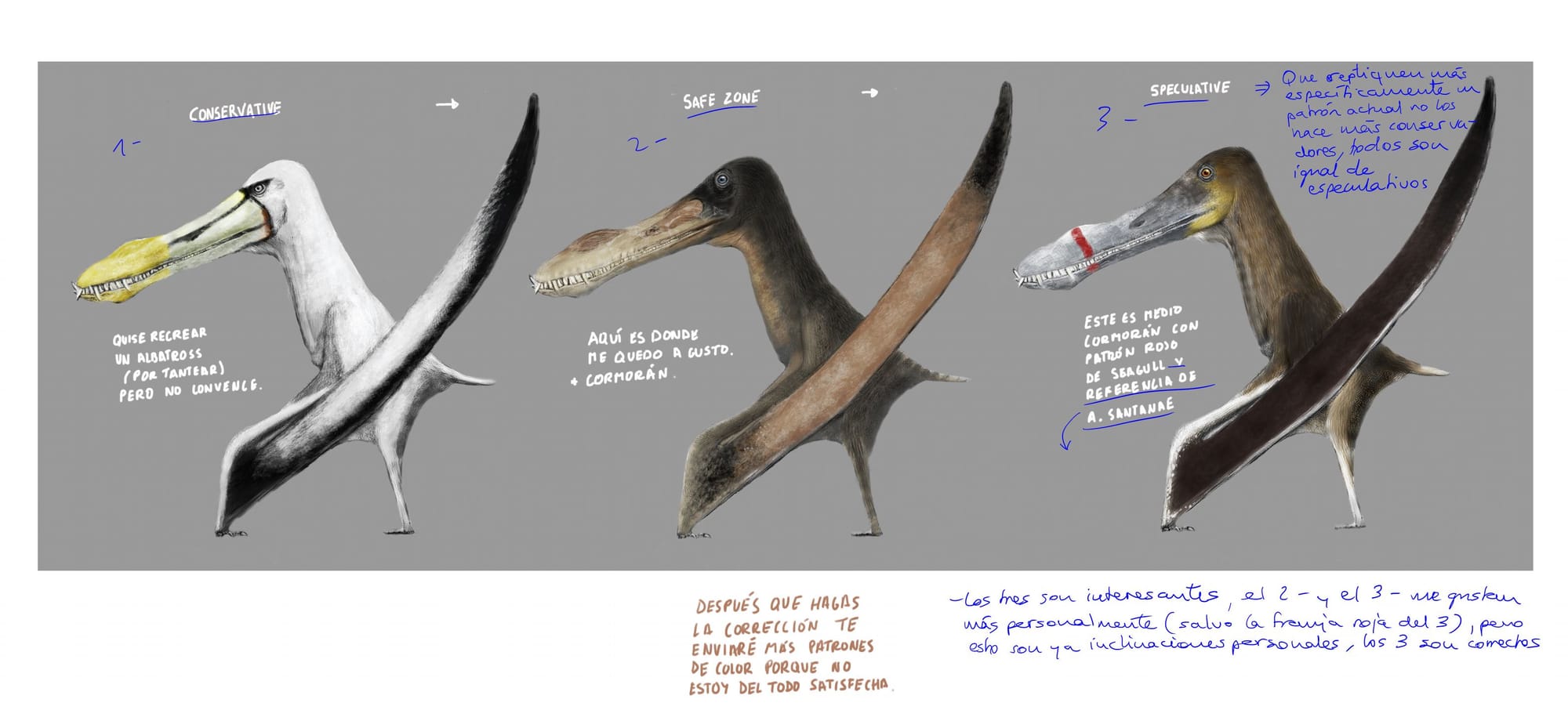
Colour and pattern studies
I explore three different colour hypotheses, from conservative to more speculative, testing how the head, crest, body, wing membranes, and markings could appear in the final life reconstruction.
This image was created in Photoshop, and it is the first draft of my final project proposal for the course. At this stage, the anatomy had not yet been corrected by the professor, and several background details still needed further development.
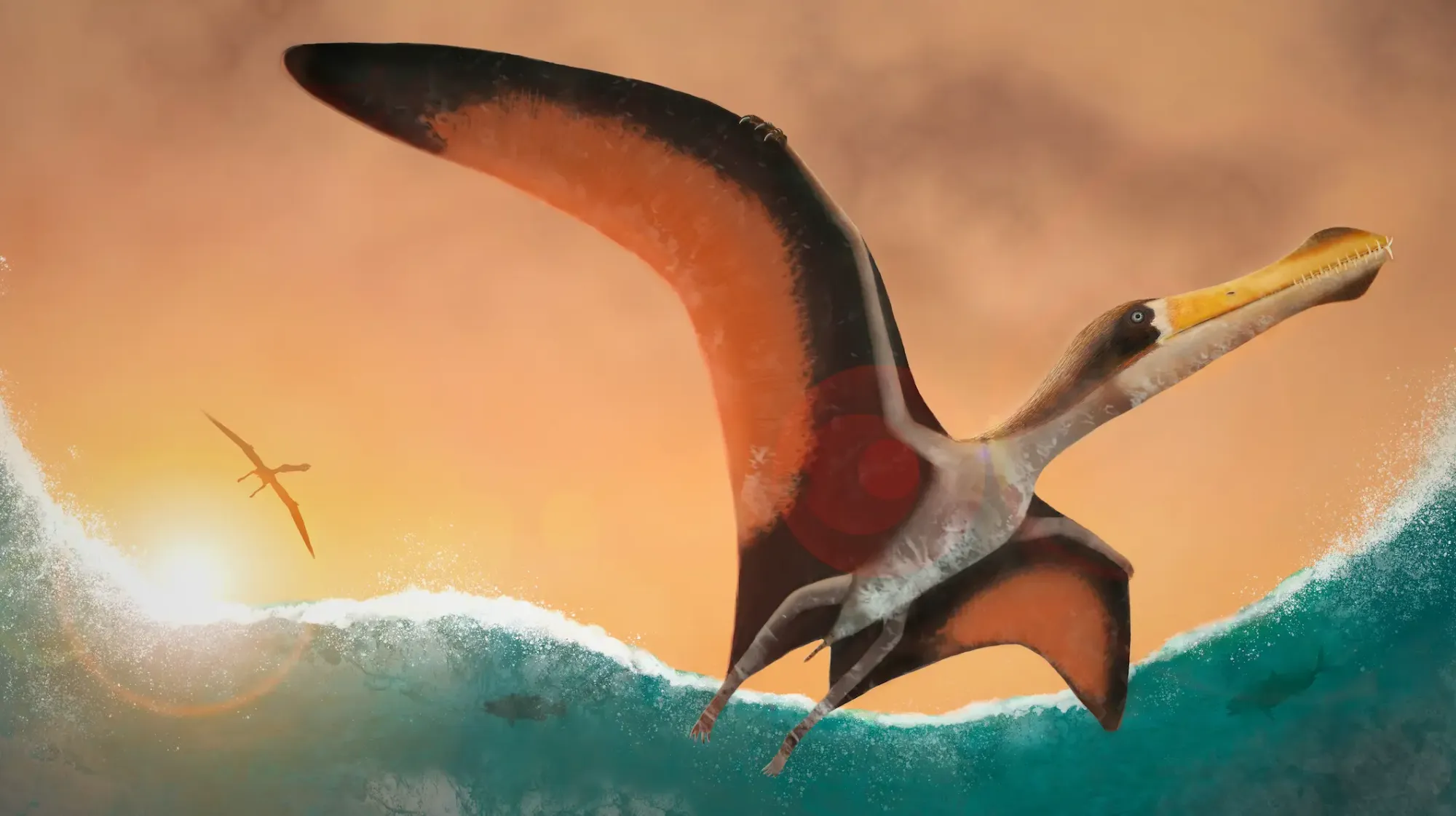
Although I did not have the opportunity to complete the course, the process taught me a great deal about creating dynamic illustrations, especially how movement, composition, atmosphere, and scale can work together to bring an extinct animal to life.
No spam, no sharing to third party. Only you and me.
Member discussion